
Featured Articles
How Supersafe Systems Products Can Help You.
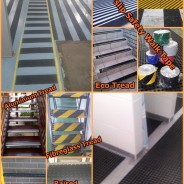
Slips, trips and falls account for the most accidents in general industry, according to OSHA, resulting in 15 percent of accidental deaths in the workplace. Only work-related motor vehicle accidents cause more worker fatalities annually. These accidents also cause many injuries that lead to time spent away from work. Slips, trips and falls (STFs) can cause sprains, strains, fractures, cuts, bruises and even concussions, which often prevent workers from doing their jobs. Today we’ll take a look specifically at slipping hazards and how they can be addressed using some of Supersafe Systems products. SUPERSAFE SYSTEMS PRODUCTS Supersafe System products, such as our Anti-Slip Peel and Stick Tape, Magic Mats, Stair Treads, Ladder Rungs, MPI Mats, increases the friction between a worker’s shoes and the ground’s surface, which helps prevent slipping. These kinds of products can be used in all sorts of workplaces ranging from manufacturing facilities and warehouses to hospitals and schools; even your home. You might be surprised to learn that hospitals experience large numbers of STF injuries (at a rate “90% greater than the average rate for all other private industries combined,” according to the National Institute for Occupational Safety and Health). Manufacturing also experiences many STFs, and 16 percent of all injuries related to STFs (on same-level) come from manufacturing workplaces. If your workplace or home falls into either of these categories—or any other category where slipping hazards exist—Our products can help you. The following are locations where our products can be very beneficial. 1. Stairs You’ve likely seen stairs with traction tape before, and for good reason. Should an employee slip on stairs, he or she could fall a significant distance, which could result in a serious injury. Adding our Non-Slip Stair Tread, which we are proud to state that we have a patent for this product, which is especially important if workers are wearing casual shoes without much traction on the bottoms. Our stair tread is ideal for all stairs that feature a smooth stepping surface, but is especially valuable for stairs within vertical exit enclosures, which are primarily used for evacuations, occurrences where even one misstep could cause an egress jam that puts lives in jeopardy. To prepare for low visibility evacuations, our stair treads have photo luminescent strip which is ideal to see when visibility is low. 2. Building Entrances One of the most common ways water enters a building is on people’s shoes when it’s raining or wet. Adding our Magic Mat at entrances can prevent workers and visitors from slipping when their shoes are wet or when they step in a puddle from someone else’s shoes. 3. Ramps Any location where elevation changes tends to experience many STFs. This is especially true when surfaces are slippery. Installing anti-slip tape or Magic Mat on ramps throughout the workplace will help workers safely navigate these areas. 4. Loading Docks Like building entrances, loading docks are high-traffic areas where workers are often exposed to the elements. Trucks and shipments enter and leave the building in this area, and many workers load and unload these materials. Loading docks can quickly get slippery if the weather is wet, and most loading docks have ledges or ramps. Combined, these factors can make loading docks pretty hazardous. Adding strips of Magic Mat or MPI Mats in parts...
read moreThe impact of Safety Culture on profitability
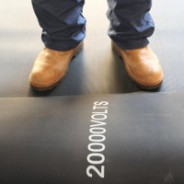
The impact of safety culture on profitability A safety culture does not operate in a vacuum. Safety incidents can effect and derail business quality, reliability, competitiveness and more importantly profitability in the following ways: 1. Loss production caused due to incidents o Time away from the job by an injured person o Time away by first aider attending injured person o Time to deal with the issues in the Health and safety Committee o Possible downtime by production process o Possible damage to product, equipment and/or plant 2. Time and costs due to repair of plant and equipment 3. Increased insurance premiums 4. Legal costs 5. Medical expenses 6. Compensation costs to injured parties In many instances, safety is seen as a “nice to have” and does not often enough reflect on the organisations audit report as a key line item. However, changing safety to a driver of profitability makes budgeting a key priority. Below are a few keys points to consider for when developing your budget forecast: Ensuring office and factory areas are zoned for safety i.e. enhance the safety of Communal areas, kitchens, bathrooms and showers Slips and falls are not likely to be reported or recorded by management. A shower and change room is a high risk area for slips that can turn into a serious injury. Fat, oil spills, washing liquid and sanitising can cause potential harmful slip areas in your kitchen and canteen. Traffic Calming Bumps are a well-designed and easily installed to slow down office and factory traffic (trucks and hysters) to acceptable safety levels and prove your identification of hazards in the workplace. Ensure safety is number one in the field Ask the question, are you prepared and can you prove that safety systems are in place for unfortunate earth fault leakage? An Electric Voltage mat is specifically designed to improve safety for your workers and shows legal compliance for your Health and Safety program. Read more (Include hyperlink to Electric Voltage Mats) on the Supersafe Systems website on the process of receiving a certified document that guarantees 220000volts insulation protection for your workers in Substations and Motor Control Centers. Consider Social Responsibility and Ergonomics Improve productivity, product quality and profitability while reducing workplace-related injuries through the installation of Anti-Fatigue Mats. Although not considered a safety system, Anti-Fatigue Mats are designed to elicit comfort for workers who are standing on manufacturing lines. Improve your safety program by installing a change-over system with your organisations safety signage. Periodic change-overs create interest and keep safety precautions top of mind. Purchasing power is only as strong as your accepted budget. Think ahead and avoid costly slips and...
read moreAre domestic falls your downfall?
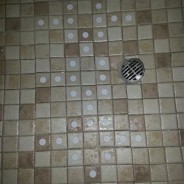
Are domestic falls your downfall? A weight bares on the shoulders of businesses to ensure safety measures are put in place to avoid costly slips and falls in the workplace. The question is what about the change rooms and/or bathrooms? Every year, thousands of people end up in hospital emergency rooms due to shower falls and other injuries suffered in the bathroom. According to a 2011 report published by the Centre for Disease Control (CDC), the figure stands at around 235,000 people per year. Although outdated, the CDC Mortality report estimated that the bathtub, shower, toilet and sink caused 234,094 nonfatal injuries in the U.S. While people have long known that the bathroom can be a hazardous area for slips and falls, the CDC report was the first to quantify how many people suffer injuries in the bathroom and under what circumstances. Ultimately, more research is required as to whether prevention mechanisms introduced have reduced the mortality rate for both young and old. Contact us at Supersafe Systems to conduct a full audit and risk assessment of your change room / bathroom facilities. Don’t make domestic falls your...
read moreEliminating hazards in the work place – South Africa vs. Global
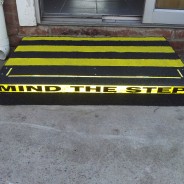
It has come to my attention that in South Africa there is a tendency NOT to report slips and near misses in the work environment. As the statistics emphasise below, this is a very strange phenomenon as many accidents resulting from slips and falls occur in the workplace. In the United States, United Kingdom, Europe and Australia, slips and trips are treated as a high risk. This high risk ranking is a priority for attention in factories and workplaces. The environment is “controlled” by placing anti-slip treads and mats in the areas of risk in order to remove any potential hazard, thus “fixing” what they can fix and ensuring control measures are put in place. According to the Centre for Disease Control and Prevention (CDC) and the Bureau of Labour Statistics (BLS): There are 2 types of falls – elevated falls and same-level falls 65% of fall-related injuries occur as a result of falls from same-level walking surfaces The services, wholesale, and retail trade industries together accounted for over 60% of injuries that resulted from same level falls The manufacturing sector alone accounted for 16% of injuries that resulted from same-level falls While same-level falls are more common, elevated falls are often the most serious and cause more severe injuries to a less number of people Over 60% of all elevated falls are from a height of less than 10 feet Over one million Americans suffer a slip, trip, and fall injury every year An estimated 20 – 30% of people who experience a slip and fall will suffer moderate to severe injuries such as bruises, hip fractures, or head injuries The most common fractures that occur from slip and fall accidents are fractures are of the spine, hip, forearm, leg, ankle, pelvis, upper arm, and hand Slip and fall accidents are the most common cause of traumatic brain injuries (TBI) and these account for 46% of fatal falls among older Americans Slips, trips and fall accidents can also cause other complications including: Death, Incapacitation, Broken bones and fractures, Long-term medical complications, Head trauma and Spinal cord injuries 1 in 6 of all lost-time work injuries result from slips, trips and falls Slips, trips and fall injuries make up almost 20 percent of all job related injuries It is estimated that these injuries result in an average of 11 days away from work Approximately 19, 565 people die in the U.S. annually due to injuries caused by unintentional falls; According to OSHA, slips, trips and falls cause 15% of all accidental deaths Slips, trips and fall injuries account for between 12% and 15% of all Workers’ Compensation expenses Slips, trip and fall injuries cost employers approximately $40,000 per incident In conclusion, the South African workforce ACCEPT slips as normal. It is not! A paradigm shift needs to occur where slips are prevented, not “over looked”. To avoid potentially costly “slip and falls” contact your Supersafe Systems representative to assist you in assessing your locations for workplace hazards and help build a culture of safety in your...
read moreKeeping your “house” in good order: Preventing costly “slip and falls”

Slip and fall accidents are almost all directly connected to the floor – either you slip on it or you fall on it. While there is no precise way to determine when someone else is legally responsible for something on which you slip and trip, cases turn on whether the property owner acted carefully so that the slipping or tripping was not likely to happen – and whether the victim was careless in not seeing or avoiding the accident. Good housekeeping is the first and the most important level for preventing falls due to slips and trips. Below are a few points to consider to keep your “house” in order. • Surface composition Types of slip resistant floors and stairs to consider include brushed concrete, sheet vinyl with abrasive material, and seamless epoxy or urethane with surface aggregate. Porous surfaces tend to be the most slip resistant. • Foreign substance potential Floor areas that are likely to be wet or spilled upon (foyers, restaurants, canteens, kitchens, food factories and process plants of all types), or contain other foreign substances (grease on a garage floor, for example) are potential danger areas for slips and falls. • Surface Conditions Loose or torn carpeting, all stair types that are not slip resistant, broken tiles, ramps and parking lot divots are examples of surfaces that create potential tripping hazards. • Level changes Ramps, sloping areas, ledges. Steps (three or fewer) and similar surface irregularities can pose a slip/trip hazard. Be aware of such conditions, especially when there is no ‘colour contrast’ to call attention to the change. • Obstructions Extension cords, furniture, planters, floor displays and parking lot bumpers are examples of obstructions. When located near a common pathway, they have historically contributed to a number of trips and falls, some with serious consequences. Move or eliminate obstructions or highlight or call attention to them with bright paint. • Visibility Lighting, glare, and lack of colour contrast are the most common examples of visibility concerns. • Stairs Stairs are defined as having more than three steps, up or down. The presence of hand rails (consider both side – and centre – handrails), and overall stairway condition, including height and depth of risers and treads, are factors to take into account when determining the degree of hazard. • Human factors Consider the age of customers and associates, as well as shoe types. For example, seniors often have sight and other impairments, and children may tend to run and “horse around”. Are there any hazards at a child’s eye level that an adult would normally see? Consider the type of footwear most commonly worn by people walking the area. • Unusual features Art work, signs, displays, brooks, bridges and similar “mood” setters are common examples of features that can cause a distraction. Of particular concern are signs and other items on easels. In conclusion, being mindful of the risk of “Slips and Falls” and using the right preventative materials can avoid a Property Owner a potential law suit or workplace...
read moreAvoiding the costly implications of “Slips and Falls”

Although there are no available statistics in South Africa specifically on slip and fall accidents, their incidences must bear some relation to the reported information regarding such accidents from the USA and the UK. The United States Occupational Safety and Health Administration (OSHA) reports that slips and falls account for 15% of all accidental deaths, second only to motor vehicle accidents, and slip injury costs exceed US $100- billion each year. A National US Health Survey indicates that one in fifteen persons incurs a home injury requiring medical attention every year, with slip and fall injuries forming the bulk of these. 28 000 people are killed every year by unintentional home injuries, and of these about 11 000 are related to slips and falls. The US National Safety Council reported that in the US 170 000 people are injured in bathtubs and showers and over 800 000 injuries occur on floor surfaces for various reasons each year. In the United Kingdom the single most common cause of non-fatal injuries to employees is slipping/falling, and the European Foundation ranks slips and falls as the second highest common cause of injuries in eight European countries. However, workplace injuries in South Africa constitute a high proportion of risk. Clerical and administrative occupations, like office workers, suffer 14,41% of all reported occupational health and safety accidents involving compensation claims. Loss incidents involving office equipment make up 3, 79% of all accidents. SA Compensation Commissioner claims reveal a saga of constant losses in human life, quality of life and suffering related to production loss and skills loss, making the prevention of the slip and fall component imperative. Total claims in recent years have averaged around 200 000 to 220 000 claims per annum. Who is responsible? Slip and fall accidents are almost all directly connected to the floor – either you slip on it or you fall on it, so who is responsible for an injury resulting from a slip and fall accident? As we have seen, many thousands of people are injured each year – some very seriously – when they slip or trip and fall on a ‘dangerous floor’, a flight of stairs, or a rough patch of ground. Sometimes the property owner is responsible for the accident, and sometimes he/she or the company is not. If you have been injured in this way, first consider that it is a normal part of life (and the force of gravity) for all things to fall on or drip onto a floor or ground, and for smooth surfaces to become uneven. Also, some things put in the ground (such as drainage grating) serve a useful purpose there, so a property owner (or occupier) cannot always be responsible for immediately picking up or cleaning every slippery substance on a floor. Nor is a property owner always responsible for someone slipping or tripping on something that an ordinary person should expect to find there, or should see and avoid. We all have an obligation to watch where we are going. However, property owners do need to be careful in keeping their property safe. While there is no precise way to determine when someone else is legally responsible for something on which you slip and trip, cases turn on whether the property owner acted carefully so that the slipping or tripping was...
read more